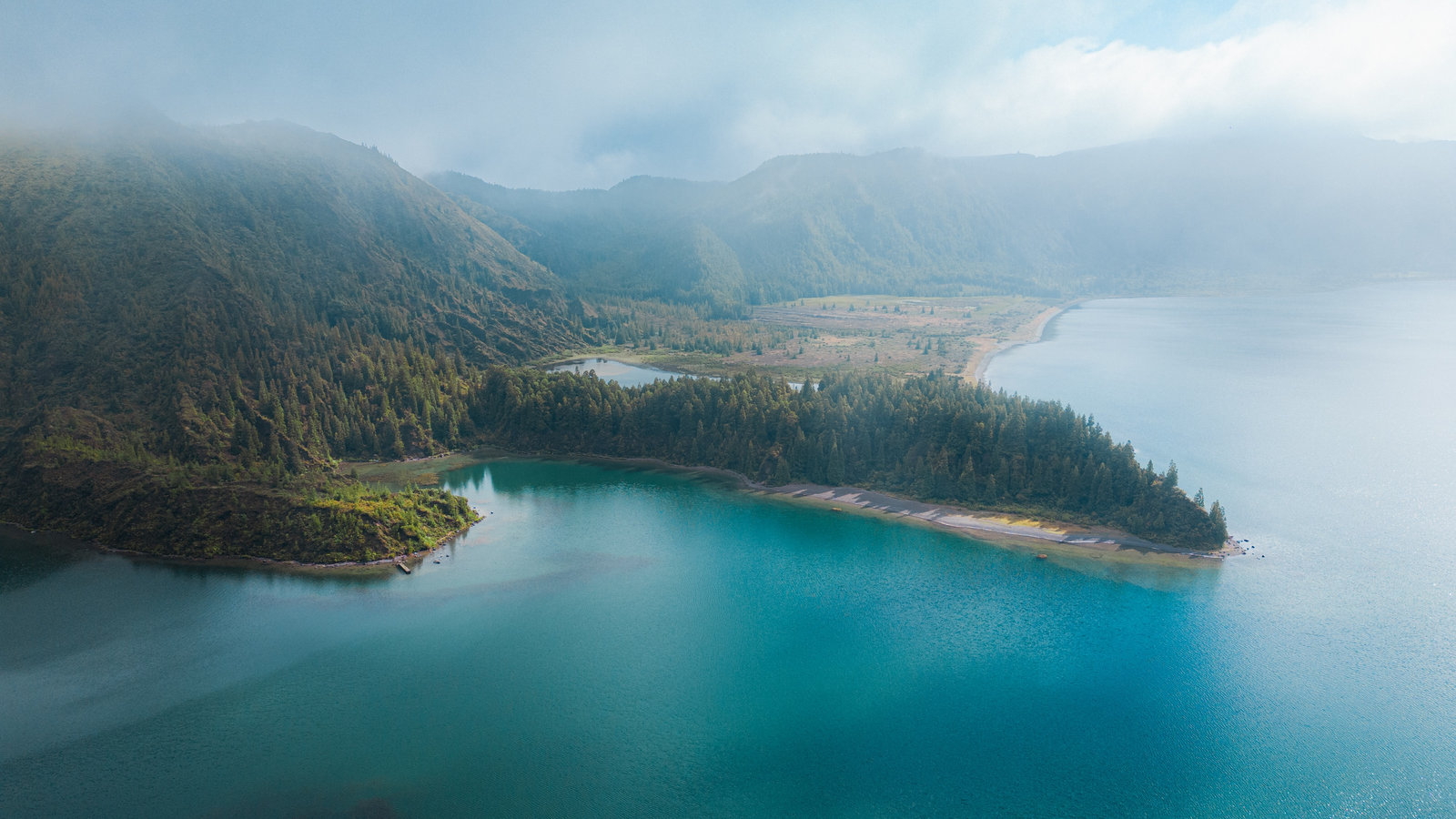

Humankind, in its great intelligence and unshakeable courage, sailed the raging oceans in search of new lands, and, in this quest, stumbled by chance upon the spectacular archipelago of the Azores which lay on its route towards new territories. Yet these incredible qualities failed it when it came to naming the newly discovered lands, untouched by any sign of human life. So what is this mystery?
1 – Before the name “Azores”, what was there?
Picture yourself: you’re an explorer, and from your ship you spot islands in the distance. Land ho! Bingo, you’ve already been sailing for several weeks, even several months, at the mercy of the wind and the current. You’d love to get some rest and, above all, to resupply the crew with fresh food and drinking water.
The problem is that you have to wait several days before approaching them and observing them to decide whether or not to moor your ship there. Especially since you have nothing at your disposal but your own eyes for this, as telescopes wouldn’t be invented until a century later! It’s this small detail that will make all the difference for the Azores archipelago.
But for now, your concern is quite different, so for several more decades you’ll call them the “Terceiras” islands (the thirds), coming after the discovery of the Canaries and Madeira. Incidentally, the specific names of each island (São Miguel, Pico, Faial…) were given as administrative needs arose, which is why the present-day island of Terceira, the last to be named, kept the archipelago’s name as its own proper name.
2 – The origin of the name “Azores”
So why is the archipelago called “Azores” today? The main theory holds that the sailors thought they saw birds called “açores” in Portuguese (“goshawks” in English) upon their arrival in 1427 on present-day Santa Maria (the easternmost island of the archipelago), the first island discovered. They were in fact “milhafres”, that is, black kites. Hence the error in observation, in the absence of any device other than the sailors’ own eyes.
Another theory, historically a little more convincing this time, holds that the navigator Gonçalo Velho, a devout Catholic, named the Azores in tribute to Santa Maria dos Açores, patron saint of a village near the town of Guarda in Portugal.
Whichever theory it may be, the archipelago that rose from the waters millions of years ago does indeed bear the name “Azores” today.
3 – New lands, really?
History would later show that these islands had already been set foot upon by other peoples, notably the Vikings, and had been mapped on ancient charts. But what we’ll remember is the discovery officially made by the Portuguese. Moreover, certain archaeological traces seem to indicate a lasting human presence on the island at an unknown date, but there is no consensus on this within the scientific community.
And you? How about coming to observe and discover these 9 sublime islands that make up the Azores archipelago? Travel to the Azores creates for you the perfect discovery itinerary, tailored to your traveller profile (family, friends, couple…), to your budget and as part of healthy and sustainable tourism. To receive your free proposal, fill out the contact form or send us an email at the following address: contact@voyage-aux-acores.com.